

THE BACKSTAGE DIARY - 8 Questions from my Tour on Queen Elizabeth
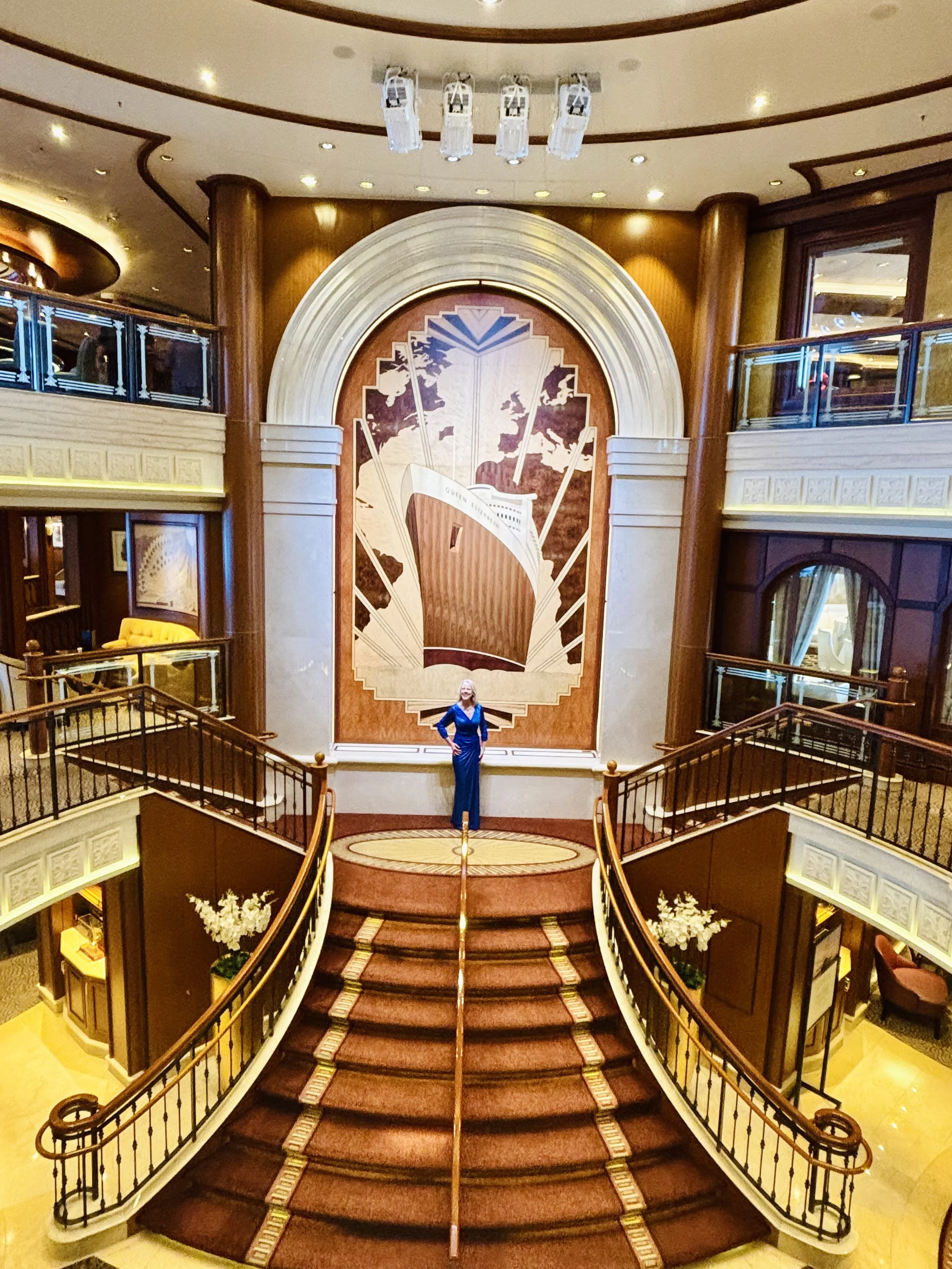
Queen Elizabeth staircase and lobby post concert no. 1
There is nothing quite like the energy of a live audience, be it in a concert hall or at sea, but watching the ocean roll past the windows while sharing music is truly an unforgettable experience.
So many of you ask about the reality of living, practicing, and performing on the open ocean. Today, here on Queen Elizabeth, I am opening up my tour diary to answer the 8 most common questions about life as a traveling musician.
1. Did the rocking of the ship ever mess up your performance?
I have not yet had any true mess-ups when the waves are high, but one does feel the motion on stage, and I have to focus especially when I play skips or virtuosic passages. Luckily, this tour is very calm.
2. Where do you practice without disturbing the passengers?
The ship features a full-size electronic piano in the artist’s cabin. With my headsets I can work pretty much 24/7 without bothering anyone. But I also want the feel of a grand piano, and like to get up super early to practice in one of the many lounges on board that feature full size grands. I get there before the ship wakes up around 4:30am or 5:00, and I like to do maybe two or three hours of work if possible. Breakfast of course is much needed after that.
3. What is it like running into your audience at breakfast the morning after a concert?
I always love meeting my audience members in person. It really puts a spring in my step, makes it so worth while, and it makes me so happy to hear that it enriches their experience. They often stop by at my table to say hello.
4. Do you actually get to explore the ports, or are you usually stuck working on board?
We guest artists get what is called passenger status. With that we have access to everything our passengers are offered, and we even enjoy a few discounts on certain things. We definitely are able to explore all harbor stop locations. It always makes for such a great rest between concerts and practice sessions.
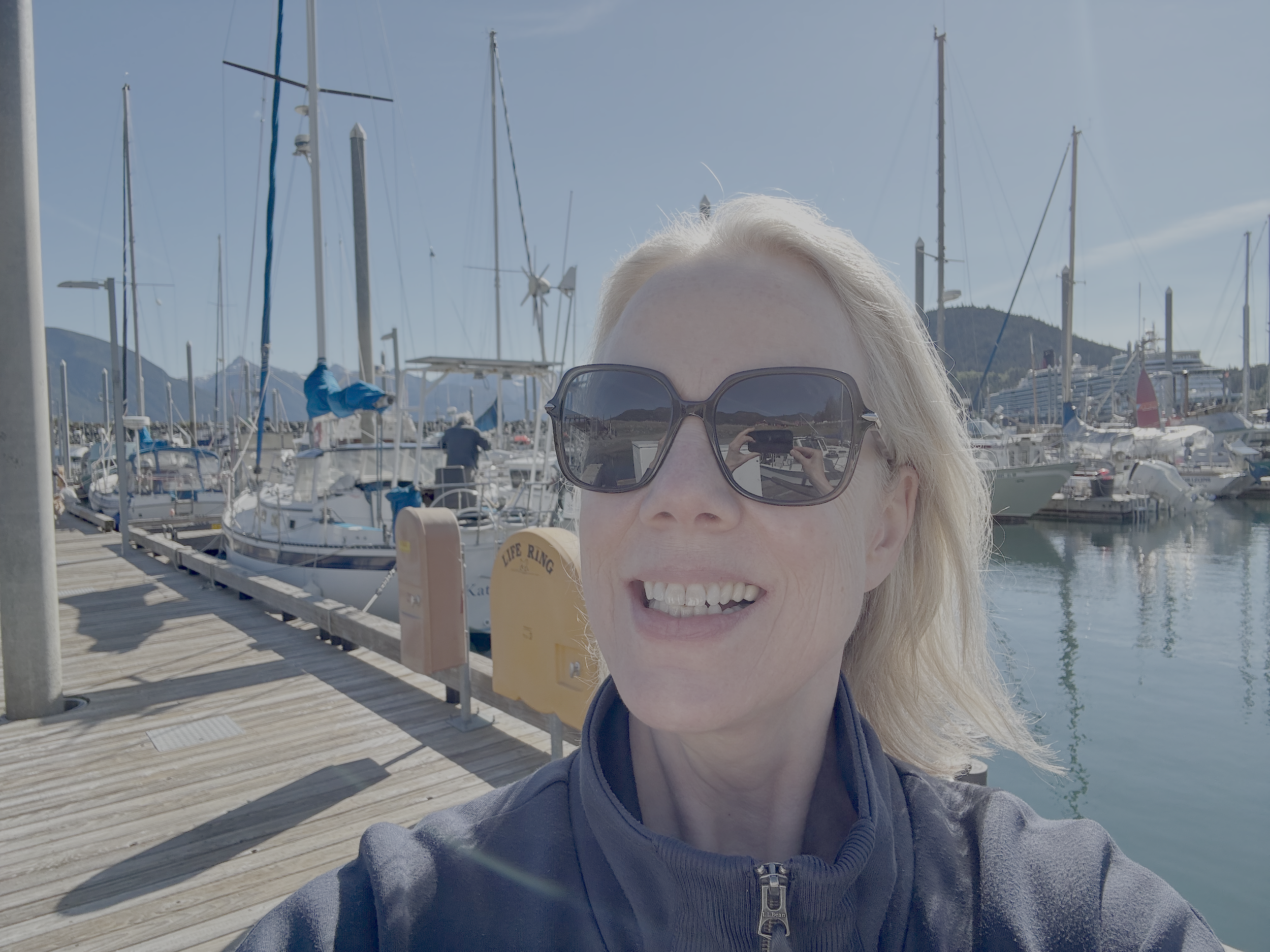
The Yacht Harbor in Haines, Alaska
5. What does a concert pianist’s cabin look like?
Space in the cabin is relatively limited, probably because it features a piano. Like all cabins it has a full bathroom, a sizable bed (maybe queen size would be my guess) and all sorts of additional amenities like a fridge, robes, slippers and more.
6. How does a cruise ship grand piano stay in tune while crossing oceans?
I often notice piano tuners working as I embark on a cruise. I think they are there just during embarkation day and work on the pianos around the ship. Once the ship is underway, the pianos don’t get tuned, but hold up pretty well.
7. How does sailing through places like Alaska change the way you interpret your repertoire?
I am currently preparing a series of chamber music works, things I don’t play on this cruise, but that are coming up. Those are the things I think about most at the moment, I think of them as the '“musical backdrop” of this current cruise. Seeing the majesty of Alaska is such an inspiration especially for the preparation of Beethoven’s Archduke Trio, which will be on my programs during next year’s Beethoven Anniversary celebrations. I am still processing it all, but hope to somehow reflect some of Alaska’s grandeur in my interpretations.
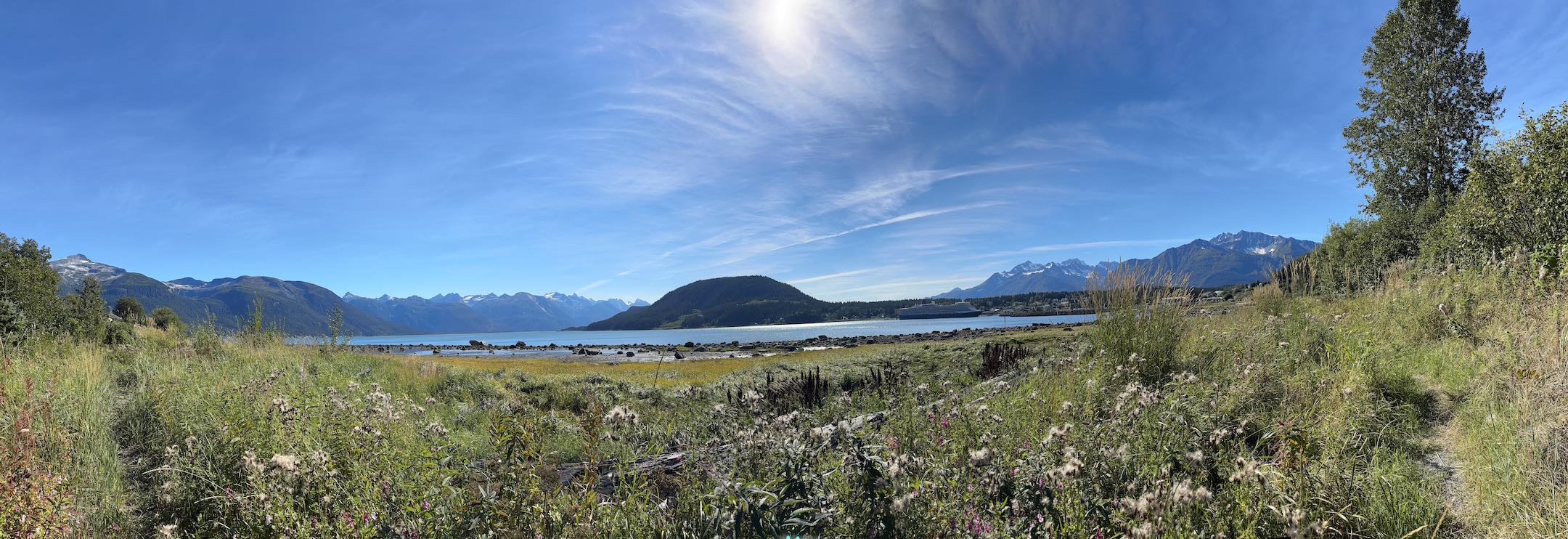
Panoramic view of Portage Cove near Haines, Alaska
8. Did you have to adapt your program to fit a cruise audience compared to a land audience?
The audiences on this Queen Elizabeth cruise are a mix of music lovers, frequent concertgoers, amateur musicians, and sometimes even music connoisseurs. They appreciate a well curated program and insights into the creative process of a composer. I sometimes wrap my repertoire choices around subjects like “wind” or “water” which of course fit the ship genre well, but I do that on land, too, so I’d say my programs are 100% the same on land or at sea.